
From Starbucks to Burger King: Western food giants are selling large stakes to Chinese private equity funds
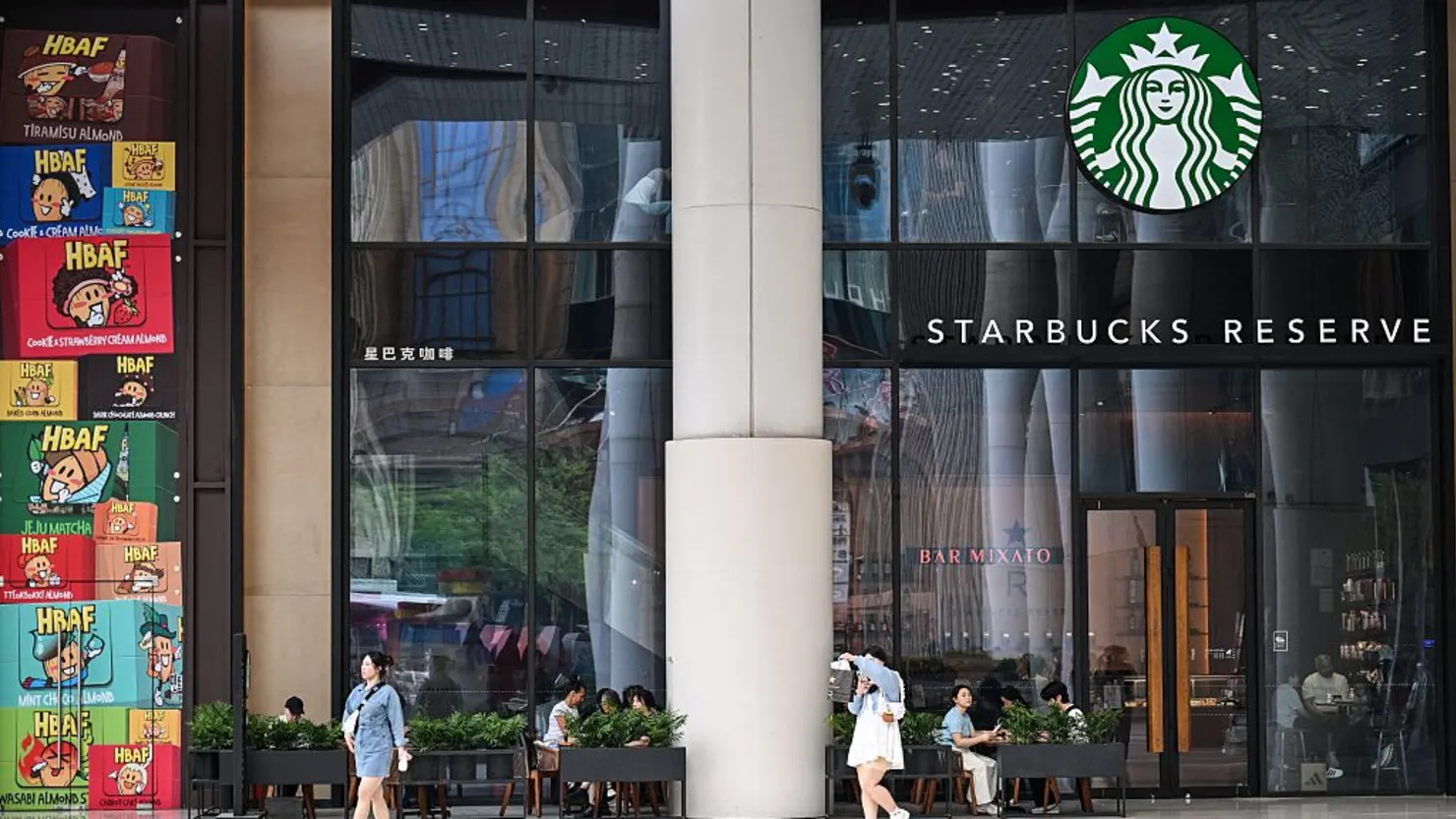
People walk past a Starbucks Reserve in the Huangpu district in Shanghai on April 11, 2025.
In a strategic pivot, major Western food and beverage chains are ceding control of their China operations to local private equity firms, betting that deep-pocketed, agile partners can revive their fortunes in the world's most competitive consumer market. Starbucks and Burger King are leading the charge, selling majority stakes to Chinese PE giants to regain lost ground against savvy domestic rivals.
Starbucks is selling a 60% stake in its China unit to Boyu Capital in a deal valuing the business at $4 billion, while CPE Capital is investing $350 million for an 83% stake in Burger King's China operations. The moves come as homegrown competitors like Luckin Coffee have overtaken Starbucks in both sales and store count, leveraging digital prowess and hyper-localized strategies.
The "China Speed" Imperative
The core appeal of local PE partners is their ability to execute at "China speed." "Their involvement enables the business to operate at ‘China speed,’" said Kei Hasegawa of YCP. These firms swiftly revamp menus, adjust pricing, scale into lower-tier cities, and leverage local networks with suppliers, distributors, and regulators—a critical edge in a market where Western headquarters-led decisions often lag.
This partnership model represents an evolution from traditional joint ventures. Companies like Starbucks are retaining intellectual property and lucrative royalty streams while handing over day-to-day control. For Starbucks, projected royalties from Boyu could form the most valuable part of its China unit's estimated $13 billion future valuation.
A Calculated Retreat with Royalty Rewards
For multinationals, the calculus is clear: either invest heavily to defend market share or bring in a specialized local partner to manage the turnaround. "Some Western firms face shareholder pressure to exit the slow-growth China segments," noted Jess Zhou of ARC Group. By taking minority stakes and focusing on royalty income, they can de-risk their exposure while maintaining brand presence.
The model has proven lucrative for PE firms. McDonald's China's 2023 buyback from Carlyle generated a 6.7x return on investment. This success is driving a surge in carve-out deals, with PE-backed transactions in China reaching $39 billion in value this year—up from $23 billion in all of 2024.
Survival Through Hyper-Localization
The partnerships underscore a fundamental shift: survival in China's food sector now demands hyper-localization. As Frank Tang of FountainVest Partners noted, 90% of Dairy Queen's ice cream products in China are tailored for the local market and unavailable in the U.S. This level of adaptation requires on-the-ground agility that local PE firms are uniquely positioned to provide.
For Western brands, these deals represent a strategic recalibration—acknowledging that brand power alone is no longer enough in a market dominated by fast-moving local players. For Chinese PE firms, they offer a chance to deploy idle capital into stable, cash-generating businesses with clear paths to growth through operational overhaul and eventual exit via sale or IPO.
As geopolitical tensions and intense competition persist, this partnership model may become the blueprint for foreign brands seeking not just to survive, but to reclaim relevance in China's cutthroat consumer landscape.
Recent
News


Newsletter
Subscribe to our mailing list to get the new updates!

Subscribe our newsletter to stay updated
Most
Reviews
More News
Markets

Markets

- Sat, 17 Jan 2026
4DMT Announces New Employment Inducement Grants
Politics
Finance
- Fri, 16 Jan 2026